

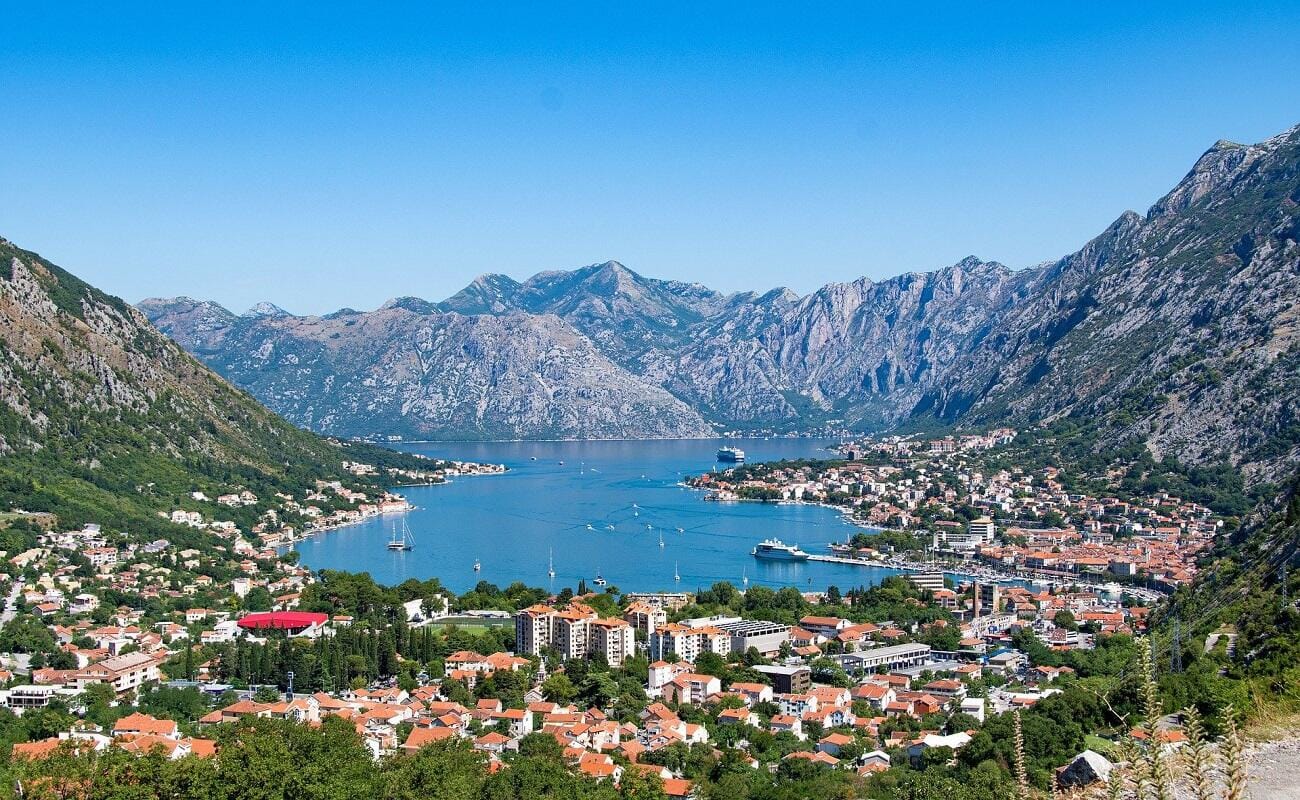
If you are looking for an ideal place for rest from the fast way of life, then you mandatory have to visit Kotor. Kotor is a city and port in the Montenegrin coast in the far north-eastern part of the Boka Kotorska Bay, one of the most beautiful bays in the Mediterranean. Kotor attracts tourists with its impressive cultural and historical heritage. Through centuries the town prospered thanks to its position as a main point of the trade crossroads, and the development of the maritime transport. Kotor has been a challenge for every tourist for centuries. Not so much in the sense of tourism, as it was challenging as a town of great cultural value with monuments of culture from the past, like its churches and cathedrals are.
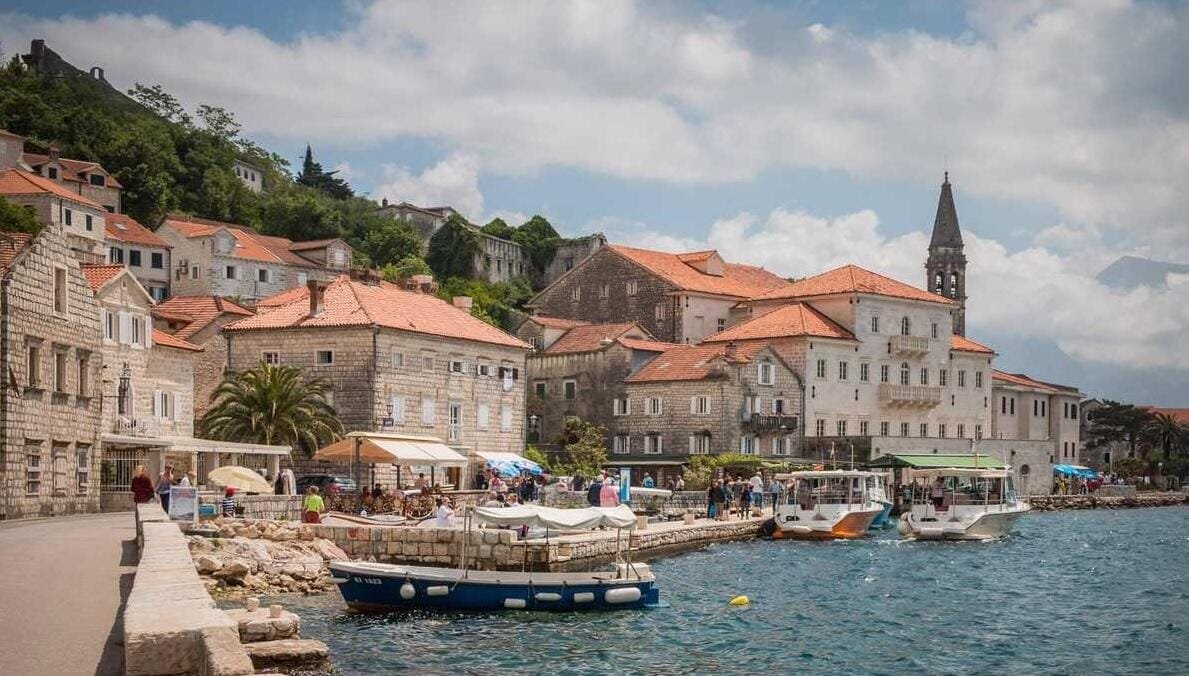
Kotor is a city of traders and famous sailors, with many stories to tell. The Old City of Kotor is a well preserved urbanisation typical of the Middle Ages, built between the 12th and 14th century. The Bay of Kotor is a place of stunning natural beauty – a vast butterfly shaped expanse of water surrounded by breathtaking mountain scenery. Impressive mountains with the ancient towns of Kotor, Perast and Herceg Novi. Kotor Bay is remarkable for its wonderful coastal scenery and the many pretty villages and towns that dot the shoreline. Along with the natural beauty of the bay and mountains, Kotor offers an array of activities. For those interested in history, take a walking tour through the cobbled streets of the Kotor Old Town followed by an easy hike to the top of the San Giovanni fortress offering an amazing view of the bay. There are a number of boat trips exploring the wider bay including the famous Perast island monasteries and the Herceg Novi blue caves. Kotor is also famous for its great selection of local meat, fish and beverage specialties available in one of the many restaurants and bars. All this and so much more make Kotor an ideal location for a first holiday to Montenegro!
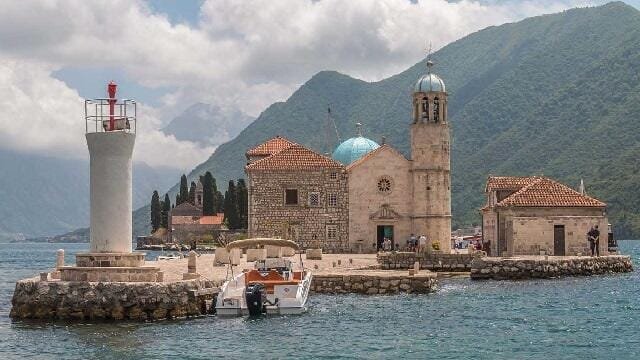
The most important tourist cite in the Town of Kotor is The Old Town (146km2). The Old Town of Kotor is surrounded by solid ramparts, built in the time of the Byzantines, the dynasty of Nemanjić and The Venetians. The ramparts are high 20m and wide up to 10 meters.
There are numerous old buildings in the town: the Renaissance Prince’s Palace, a baroque clock tower from the 17th century, the Grgurin Palace where Is now Maritime Museum, the Cathedral / Basilica of Saint Tryphon, built in 1166, the church of St. Luke of 1195, the church of St. Mary (Blessed Ozana), renovated in 1221, the church of St. Paul from 1266, the church of St. Klara, with a Franciscan monastery, where a library of about 20,000 books and 50 incunabula, the oldest printed books until 1500. The palaces in Kotor are: Buža (XIV century), Drago (XV), Pima (XVI), Vrakjen (XVIII) and Grubonja (XVII century) (Kordić, 2009; Kalezić, 1970).
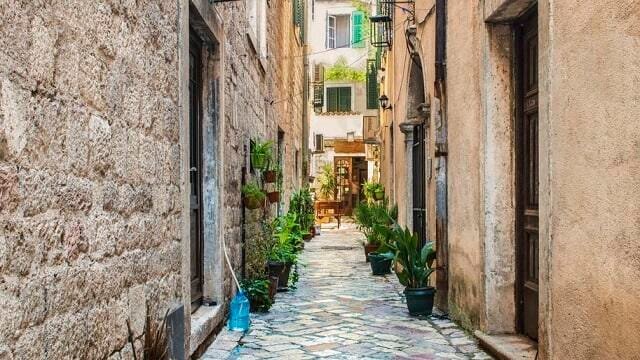
If you are for the first time in Kotor, the impression that you will have, we are sure, will be more convincing that the adventures from the movies that you have seen, or the books that you have read about those ages, or about this town. It has the tracks of Illyrian, and Roman culture, as well as pre Roman, Roman, Gothic, renascence, and baroque culture. Old town is counted into the Mediterranean towns with best preserved medieval urban settlement from the XII to XIV century. The Old Town of Kotor is unique example of fortification architecture in Europe and it is under UNESCO’s protection from 1979 (UNESCO, 2018). The Town of Kotor is a summer destination. Despite the National and local management’s efforts to extent tourist season, Kotor is not very attractive to tourists during winter months. In addition to sightseeing of the old town and cultural and historical sights, other tourist activities are: sport and recreation, diving, sailing, walking, hiking, biking.
The Town accounts more than 4 500 private accommodation units. The great number of accommodation units goes to private rooms. This can be judged by tourist professionals and academic experts because it is not in correlation with the National Tourist Policy. Actually, The Strategy of Tourism Development in Montenegro until 2020 identifies the area of the Town of Kotor as a luxurious destination. In real world, there is not a lots of new small luxurious hotels, but the number of hostels and private accommodation is increasing. There are over 55 restaurants, taverns, pizzerias. The two traditional manifestations that are held in Kotor are: Kotor Art and Boka’s night. These events are organizing in the summer peak season.
In Kotor there are also numerous palaces: palace Drago, with Gothic windows from the XV century; palace Bizanti from the XII century; palace Pima, with typical shapes of renascence and baroque, from the XVI century; palace Grubonja, with a coat of arms of the old Kotor pharmacy, founded in 1326 year; palace Grgurin from the XVII century, which today is the building of the Maritime museum, as well as the Sat kula (Clock tower) dating from the XVI century, beside which there is a medieval pillory.
No matter from which doors or entrance in Old Kotor you are coming, the asymmetrical structure of the narrow streets and squares has numerous medieval monuments. Not just monumental edifices like the churches, cathedrals or museum monuments, but also with the ornament not only on the culturally – historical but also on the ordinary edifices, like family houses in which people still live. On the large number of family houses it is still very easy to notice the marks of the past epochs. Mostly those are ornaments that usually testify about the Roman Empire on these territories. You can see Roman marks, like numbers, sentences, lion charac- ters, dragons, snakes etc.
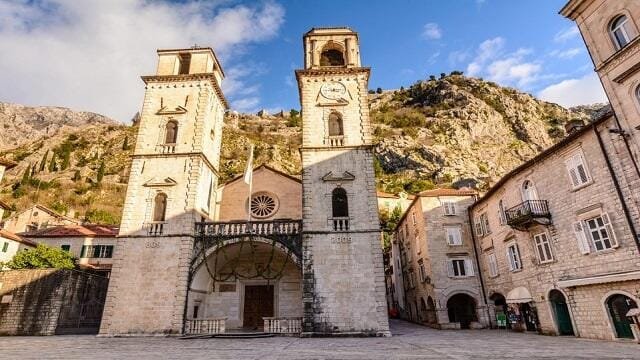
What Kotor is most famous for is the old town cathedral of Sveti Tripun (St. Tirpun). That temple is mentioned for the first time in IX century, when the relics of the Sveti Tirpun, who died in martyrdom in the era of the Roman emperor Decije, in the III century, were brought in it. The chroniclers testify that that temple most probably disappeared in the fire, in the X century, and it was rebuilt in the XII century. The cathedral of Sveti Tripun was built in the Romanic style, with the elements of the Byzantium architecture. As the most important monument and symbol of the Old town, the cathedral of Sveti Tripun, ahs a rich treasury of the precious tings among which we have: a gilded altar, baroque frescoes, and a great number of ornaments of great value.
To the monuments in the Old town of Kotor we should add a city tower which originates from the XVII century, with the pillory in front of it, and a clock mechanism which is a part of the edifice. Nearby the tower is also the Tower of the city watch. Prince’s palace, and the City Theatre, which was the first theatre that started to work in the XIX century on the Balkans.
The faithful devotees to culture, as well as the organizers of the manifestations in the open, have been trying for years to bring to Kotor as many tourists and guests, who are more than thrilled with numerous happenings, like traditional Kotor manifestations are: carnivals, masked balls, fisherman’s or religious fiestas, numerous cultural events intended for all generations. If those are the reasons for your visit to Kotor, than quickly and easily, at one place, and in one town, you will fell the cheeriness, good mood and you will fill your senses with positive energy.
Kotor’ summer fiestas – take place during July. For the funs of god sound, classic and spiritual music, chamber and instrumental music, the most interesting festivity is KOTOR PRO ARTE. That manifestation is marked by the concerts that are usually held in Kotor churches, and concert halls. The devotees of culture are given the possibility to hear many concerts of great world music creators. The halls for concert music in Kotor, on those days, are filled with the sounds of music which used to be performed in the European courts.
No Comments